




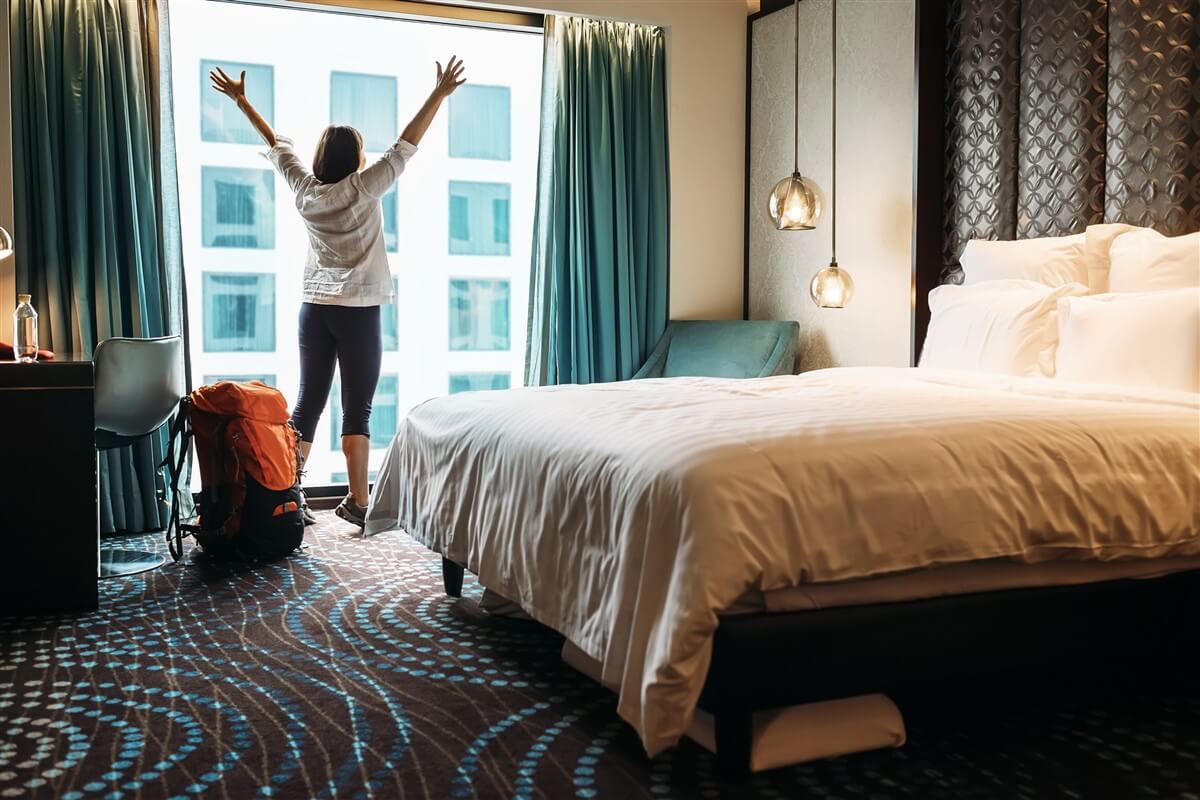
The best accommodation for a solo trip is somewhere that makes your days easier. That might be a hotel with reception, a hostel with a private room or a small apartment near the places you want to explore. The cheapest bed is not always the best fit, and the most sociable property is not automatically the most comfortable.
Start with the balance you want between privacy, help and opportunities to meet people. Then compare the actual properties rather than relying on the label above the door.
Hotels: useful when you value a predictable base
A hotel can suit a traveller who wants a private room and clear services. Reception may make arrival simpler, while breakfast or an on-site restaurant can remove one decision from the day. Check which services are actually available; a property described as a hotel may still use remote check-in or limited staffing.
Look closely at the room rate for one adult. Compare the total with breakfast, taxes and any other compulsory charges included. A larger room is not necessarily worth paying for if you expect to use it mainly to sleep, but a desk or comfortable chair can make a difference if you enjoy quiet evenings indoors.
Hotels can be less naturally sociable than hostels. If company matters, plan activities separately rather than hoping that a busy lobby will provide it.
Hostels: judge the atmosphere before the price
A hostel can offer shared spaces, organised outings and a lower-cost bed. It can also be quiet, party-focused, mixed in age or largely used by groups. Read recent reviews for the atmosphere you want, especially comments about noise and the common areas.
Compare dorm size, privacy curtains, storage, bathroom arrangements and reception hours. If you are considering a private room, check whether it has its own bathroom and whether common-space access is included.
A private room in a sociable hostel can be a useful middle ground. You can join breakfast or an activity and still close your own door later. It may cost more than expected, so compare it with nearby guesthouses rather than assuming a hostel is always the cheaper option.
Guesthouses: ask how the property operates
A small guesthouse may offer a more personal welcome and a less anonymous setting. That does not guarantee that someone will be available throughout the day. Check how arrivals, luggage storage and questions are handled.
Breakfast arrangements can influence the social experience. A shared table may make conversation easier, while a tray delivered to the room provides more privacy. Neither is better in every case; choose according to how you want your mornings to feel.
Apartments: more independence, more details to verify
An apartment can be useful if you want to cook, wash clothes or spend several days following a routine. Before booking, establish whether you are reserving the whole property or a room within someone else’s home.
Check cleaning charges, minimum stays, key collection and the full check-in window. Ask how you get help if the entry code fails or you arrive later than planned. A kitchen is only useful if it has the equipment you need and shopping nearby fits your itinerary.
For a short solo break, an apartment’s extra space may offer less value than a convenient location. For a longer stay, those ordinary facilities can matter much more.
Use the map to test a normal day
Put the property, arrival point and two or three likely activities on a map. Then check the real walking or transport routes. A place just outside the centre may work well if it has a straightforward connection; a closer property can still involve steep steps or an awkward entrance.
Consider your return after dinner as well as your departure after breakfast. Accommodation that is convenient only in one direction or at one time of day may not support the holiday you are planning.
Read reviews for repeated patterns
One person’s complaint about a small room may not concern you. Repeated comments about failed check-ins, misleading room descriptions or noise deserve more attention. Check whether the reviews concern the same room category you are booking.
Use specific questions to resolve anything important: “Is there a lift from the entrance to this room?” is more useful than “Is the building accessible?” For more ways to compare cost and location, see our accommodation search guide.
Choose a base for the trip you are taking
If you are anxious about arrival, a staffed property may be worth prioritising. If shared sleeping space would prevent you resting, a dormitory is unlikely to be a good saving. If meeting people is a major goal, make sure there is an actual social setting rather than a photograph of an empty lounge.
You can change accommodation styles between trips. A quiet hotel this time and a social guesthouse next time are both valid ways to travel alone. The useful choice is the one that lets you enjoy the destination once you leave your bag behind.