




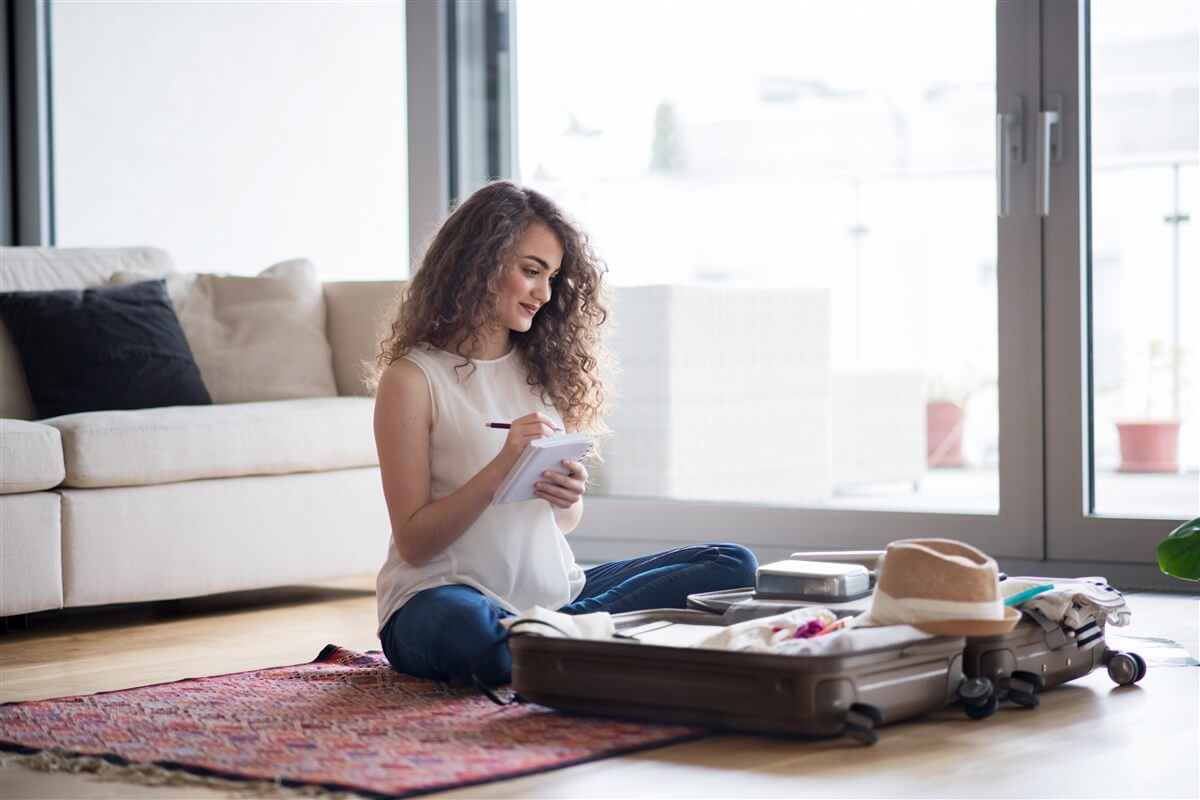
Packing for solo travel is less about carrying every possible solution and more about managing your own luggage comfortably. You need to move it through stations, find a booking reference while holding it and settle into a room without spreading half the contents across the floor.
Start with the journey and the activities you have planned. A city break, beach stay and walking holiday need different equipment; they do not need three versions of the same everyday item.
Test whether you can manage the bag
Before deciding that everything fits, pack the bag and move it around. Lift it as you expect to on the journey, carry it for a short distance and check whether you can keep one hand free. Consider the actual route, including steps and uneven surfaces.
A backpack is not automatically more practical than a wheeled case. Your comfort, the weight and the surfaces matter more than the style of travel associated with the luggage. Choose something you can handle without depending on a stranger to move it.
Pack for a repeatable clothing routine
Choose clothes that work together and can be worn in more than one situation. Plan around the likely weather and the activities you have actually booked. Avoid adding a separate outfit for every hypothetical invitation.
For a longer stay, check whether washing facilities are genuinely available and what using them involves. A laundry plan can reduce the amount you carry, but only if you leave enough time for washing and drying.
Shoes often take more space than expected. Prioritise a pair suitable for the walking you will do and add another only when it serves a clear purpose. New footwear is better tested before the holiday than on the first full day.
Keep arrival essentials together
Make a small section of your bag accessible without unpacking. It should contain what you need between arriving and settling into your room.
- Your accommodation address and arrival instructions.
- The booking or travel documents needed during that stage of the journey.
- Your phone and a way to keep it charged, subject to your carrier’s rules.
- Any personal essentials you need during the journey.
- A weather layer appropriate to the destination.
Keep valuables and important documents under your control. Store copies separately from originals where appropriate, while avoiding unnecessary exposure of private information on shared devices.
Check rules rather than copying someone else’s packing list
Baggage dimensions, liquid restrictions and rules for batteries can depend on your airline, route and departure airport. Verify them with the relevant carrier and airport before packing. A bag described by a shop as cabin-sized is not a guarantee that it meets your booking’s allowance.
For an overseas trip, check current entry and local requirements through official country advice. If you carry medication or specialist equipment, confirm the rules that apply to those specific items rather than relying on a general list.
Choose a few items that support being alone
A compact book, headphones or a notebook can make waiting and solo meals more pleasant. A small everyday bag can save you carrying the main luggage around the destination. A reusable water bottle may be useful where refill arrangements suit your itinerary.
Choose these items for how you travel, not because they appear in every “essential” list. You do not need a travel gadget simply because it is marketed to solo visitors. Ask when you would use it and whether something already packed does the same job.
Leave space for the return journey
A bag that only closes after careful rearranging at home will be awkward to repack on departure day. Leave some space and keep categories together so you can find missing items before checking out.
If you expect to buy something, decide where it will go. Check the transport conditions for the return journey too, especially if your route or carrier changes.
Use the trip to improve the next packing list
After returning, note what you repeatedly used and what never left the bag. Keep specialist items on a separate list so they do not become permanent additions to every holiday.
For an active break, start with the provider’s equipment information and build from there. Our solo padel guide includes activity-specific considerations, while the trip-planning guide can help you connect luggage choices with the route.
The useful result is a bag you can manage and a holiday in which you can find what you need. A slightly imperfect outfit is usually less disruptive than carrying far more than you wanted.